“From Chips to Tips of National Growth – Self -Reliant Swadeshi India.”
“Atmanirbhar Bharat: by Indians, for India, with the world, it is Self-reliance that escalates National Strength.”
Semiconductor is the intellectual property of the creator which can be registered and protected in India under The Semiconductor Integrated Circuits Layout-Design (SICLD) Act, 2000. Any person desirous to get it registered can apply for registration of the layout-design, by classification of design on the basis of
- Structure,
- Technique and
- Functionalities of the circuit
Duration of registration —The registration of a layout design shall be valid for a period of ten years from the date of filing an application or from the date of first commercial exploitation anywhere in India or in any country, whichever is earlier.
Fees – The Registration fees is INR 5,000* by Demand draft in favour of Controller General Patent and Trademark, Payable at Dwarka,New Delhi.
The Semiconductor Integrated Circuits Layout-Design Registry (SICLDR) has its head office located in the Boudhik Sampada Bhawan, Plot no. 32, Sector – 14, Dwarka, New Delhi110075. The territorial limits within which such office of the Semiconductor Integrated Circuits Layout-Design Registry may exercise its functions shall be the whole of India.
Our Experience at SEMICON India 2026: Connecting with India's Semiconductor Ecosystem
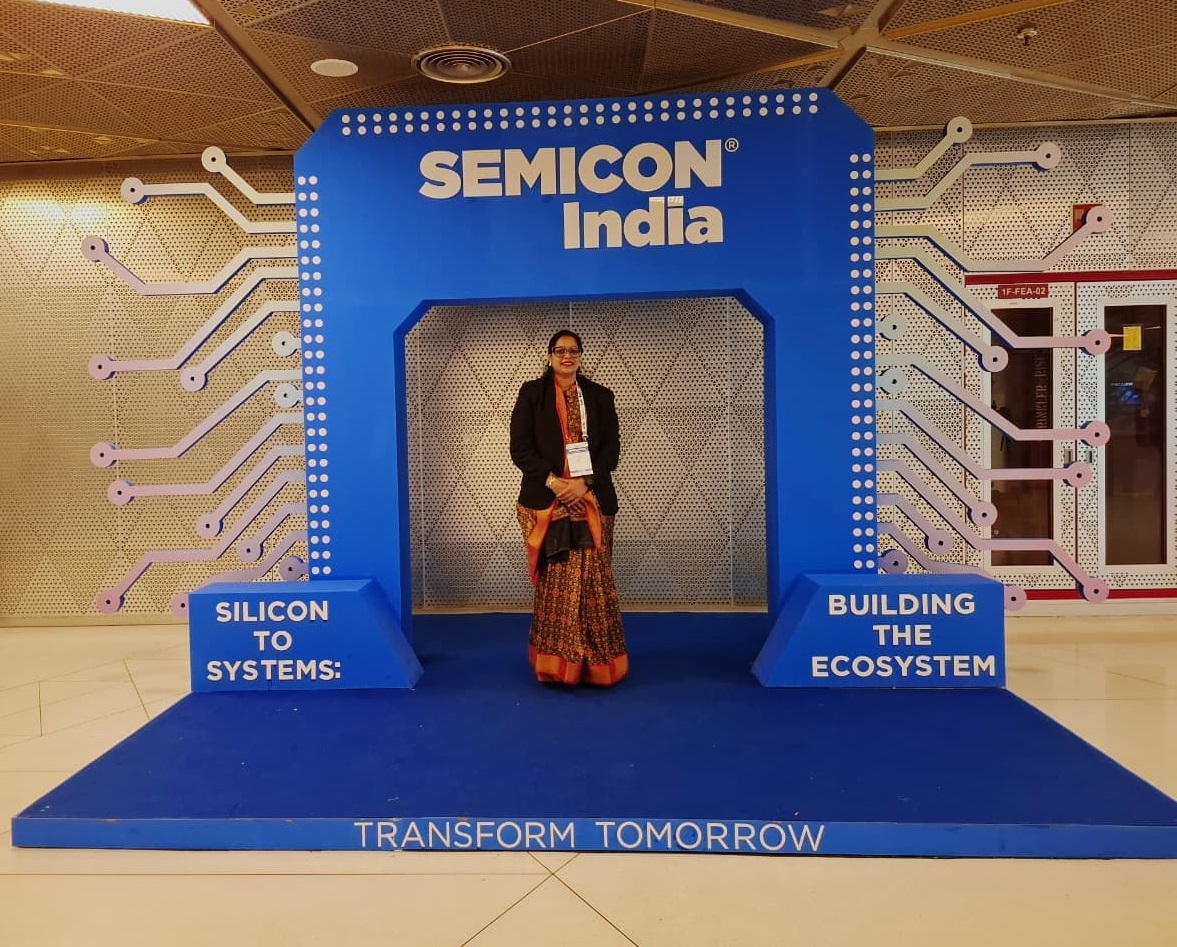
We were delighted to participate in SEMICON India 2026, which took place from 17-19 September 2026 at Yashobhoomi in New Delhi, organized around the theme "Silicon to Systems: Building the Ecosystem."
Attending the conference provided our team with a valuable platform to move beyond our standard professional activities and establish direct engagement with India's dynamic semiconductor ecosystem. Throughout the event, we connected with representatives from multiple organizations and companies, shared insights on industry developments, and deepened our comprehension of the opportunities and challenges influencing the sector.
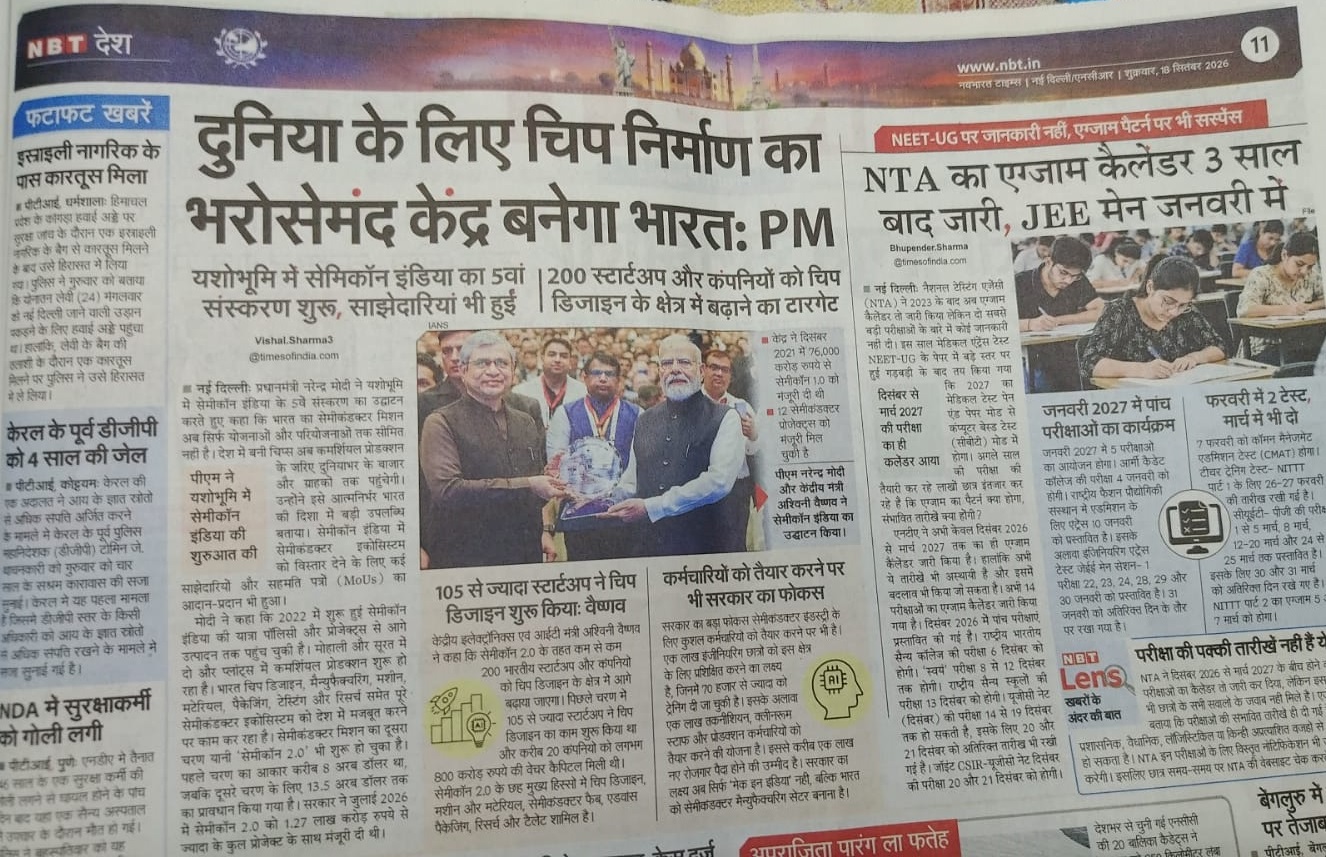
Interacting with Professional Sectors
Our engagement at SEMICON India 2026 provided meaningful perspectives on the scope of India's semiconductor objectives.
Discussions with industry stakeholders addressed advancements across chip design, semiconductor fabrication, sophisticated packaging solutions, electronics, manufacturing equipment, raw materials, research initiatives, and innovative technology implementations.
A particularly notable feature of the conference was the wide range of organizations represented within the ecosystem. The event successfully convened established multinational corporations, Indian businesses, promising startups, and cutting-edge technology developers on a unified platform, facilitating valuable dialogue and fostering prospects for strategic partnerships.
Additionally, the conference served as an ideal venue to gain insights into how organizations are navigating India's swiftly evolving semiconductor sector and identifying the growth potential presented by the nation's advancing technological and manufacturing infrastructure.
Key Highlights of SEMICON India 2026 Conference
The magnitude of SEMICON India 2026 demonstrated India's expanding significance within the worldwide semiconductor sector.
The conference attracted over 600 exhibitors, comprising roughly 300 participants from abroad, representing 52 nations. Additionally, the event assembled more than 150 industry experts and achieved in excess of 51,000 registrations. The showcase presented an extensive range of technologies and competencies throughout the semiconductor value chain, enabling attendees to gain insight into the complete progression from raw materials and production equipment through integrated circuit design and fabrication to final assembly and end-user systems.
During the three-day SEMICON India 2026 conference, a total of 56 memoranda of understanding (MoUs), announcements, and strategic initiatives were documented.
Major Companies & Their MoUs
Tata Electronics spearheaded the event by concluding 16 strategic partnerships designed to create a localized supply network supporting its forthcoming large-scale manufacturing facilities in Dholera, Gujarat, and Jagiroad, Assam.
Key Corporate Partnerships Included
Fujifilm Corporation (Japan)
In collaboration with Tata, Fujifilm has undertaken localization efforts for essential semiconductor materials. The company has pledged ₹800 crore to establish a specialized semiconductor materials manufacturing facility positioned next to Tata's Dholera fabrication plant.
Nexperia B.V., headquartered in the Netherlands
Has established a strategic partnership with Tata to collaborate on technological advancements, wafer production, component assembly, and quality testing services.
Sumitomo Chemical and INOX Air Products
Have executed agreements to deliver locally-sourced high-purity chemicals and gases essential for semiconductor manufacturing operations.
Key Industry Participants
Multinational corporations including ASML (providing lithography equipment support), JSR Corporation (delivering photoresists), and BESI have established long-term supply contracts, whereas Applied Materials has revealed intentions to allocate up to $5 billion toward Indian operations throughout the coming ten years.
Key Announcements & "Semicon 2.0"
The conference formally announced the commencement of Semicon 2.0, representing the subsequent phase of the India Semiconductor Mission, which has already drawn approximately $12 billion in investment commitments.
Evolution Toward Upstream Supply Chain Integration
In contrast to Semicon 1.0, which concentrated on recruiting large-scale fabrication facilities valued in the billions, Semicon 2.0 directs its efforts toward the comprehensive supply chain ecosystem. The updated framework broadens financial incentives to encompass semiconductor manufacturing equipment, source materials, high-purity chemical compounds, and domestic research and development initiatives.
Commercial Achievements
The government has declared that five semiconductor assembly and testing (ATMP/OSAT) facilities are currently functioning operationally (encompassing Micron, Kaynes, and CG Semi). Prime Minister Narendra Modi additionally conducted a virtual inauguration of newly established active commercial production facilities at Suchi Semicon located in Surat and CDIL situated in Mohali.
Semiconductor Industry Expansion Initiative
The government unveiled an enhanced Semicon 2.0 framework establishing a goal to foster a minimum of 200 homegrown chip-design enterprises, representing significant growth from the existing base of 105 startups currently developing proprietary technology through professional-grade EDA software solutions. Prominent domestic design organizations, including L&T Semiconductor Technologies and Axiro, have disclosed strategic initiatives to expand their operational capacity and transition chip manufacturing to domestic facilities.
An Emerging Global Framework
The conference demonstrated substantial international engagement through country pavilions representing Japan, South Korea, Malaysia, the Netherlands, Singapore, and Sweden, complemented by participation from various Indian states and numerous industry organizations. This reflected the expanding global recognition of India's semiconductor objectives and the potential for international cooperative ventures.
- Focus on Innovation and Start-ups: The conference underscored the significance of startups, innovators, and emerging technology enterprises. The Startup Pavilion, Innovation Showcase, and Student Hackathon served as venues for presenting novel concepts and showcasing the expanding reservoir of talent and entrepreneurial initiatives flourishing within India's semiconductor industry.
- From Silicon to Systems : The conference's central theme, "Silicon to Systems," effectively encapsulated the comprehensive trajectory of India's semiconductor advancement. The presentations and displays illustrated that establishing a robust semiconductor ecosystem transcends manufacturing facilities alone. It integrates circuit design, production equipment, raw materials, component assembly, quality assurance, electronics production, scientific investigation, workforce development, and the interconnected technological infrastructure that supports these operations.
Establishing the Foundation for Microelectronics Innovation Through Architectural Security
In the aftermath of SEMICON India 2026, India's semiconductor design sector is experiencing accelerated growth through the Semicon 2.0 initiative. With technological architectures advancing at a swift pace, safeguarding your intellectual property has become essential for maintaining competitive advantage and attracting investor confidence.
Legalese Law firm delivers expert intellectual property rights guidance to fabless startups, international semiconductor manufacturers, and academic research organizations, protecting proprietary semiconductor technology through a comprehensive two-tier legal strategy.
Our Core Semiconductor Intellectual Property Services
- The Semiconductor Integrated Circuits Layout-Design Act, 2000 (SICLD Act) Registration service provides thorough oversight of your statutory registration process. Our comprehensive protection safeguards your physical three-dimensional layout topologies, geographic circuit structures, and mask designs from unlicensed electronic or optical reproduction prior to commercial tape-out.
- Hardware Patent Prosecution: Strategic development and submission of patent applications designed to protect functional advances in microelectronic technology, cutting-edge circuit innovations, and next-generation System-on-Chip (SoC) frameworks.
- Intellectual Property Enforcement & Litigation: Providing comprehensive representation to clients in complex semiconductor design theft matters, mask work infringement litigation, and patent protection proceedings.
Why Choose Us?
We connect sophisticated semiconductor engineering expertise with rigorous legal protection mechanisms. Our dedicated intellectual property rights division safeguards your technological innovations against unauthorized replication while optimizing your legal framework for worldwide market expansion.
Within the semiconductor sector, safeguarding your physical chip architecture demands a distinctive combination of microelectronics expertise and legal precision. As a dedicated Intellectual Property firm, we serve as the essential connection between engineering and legal disciplines to protect your silicon-based innovations.
The Tech-Legal Advantage
We go beyond administrative documentation. Our team comprises intellectual property specialists with expertise in electronics, enabling us to effectively analyze intricate three-dimensional designs, layer topographies, and protective mask patterns to ensure precise registry compliance.
Layered IP Strategy
SICLD registration provides protection exclusively for physical layouts, leaving circuit functionality undefended. Our comprehensive hardware defense strategy integrates layout safeguards with utility patents for functional innovation and trade secret protections for your RTL code.
Flawless Timing & Compliance
The registration window for layout designs operates under stringent requirements—the design must demonstrate originality and have undergone commercial exploitation for less than 2 years on a worldwide basis. We carefully track your design-freeze phase to facilitate prompt filing submissions, thereby preventing expensive, untimely exposures.
End-to-End Documentation
We manage the entire documentation workflow—from detailed technical specifications to tangible prototypes—ensuring your submission successfully navigates regulatory review and obtains your 10-year exclusive commercial rights efficiently.
Enforcement
When a competitor replicates your design framework by claiming it as reverse engineering, we safeguard your intellectual property rights.
How we can help ?
We as Legalese Law Firm act as a bridge between engineers and the Semiconductor law, ensuring semiconductor layout-design is validly registered, made enforceable, and commercially usable under the SICLD Act, 2000 thereby reducing risk, avoiding mistakes, and maximizing its commercial value. With the upcoming boom in making Self-reliant India, we work on getting you a SICLD registration which involves both technical + legal complexity.
India has officially achieved mastery over indigenous Gallium Nitride (GaN) semiconductor technology, joining an exclusive global group of only seven countries possessing this vital capability. Under the leadership of Dr. Meena Mishra, Director of the Solid State Physics Laboratory (SSPL-DRDO), India's Defence Research and Development Organisation has transitioned its domestically developed GaN Monolithic Microwave Integrated Circuits (MMICs) from laboratory innovations to operational strategic hardware.
The timeline of India's Gallium Nitride (GaN) technology advancement includes two significant milestones:
i. Initial Laboratory Success: The primary scientific achievement was realized by DRDO's Solid State Physics Laboratory (SSPL-DRDO) in March 2023, when researchers successfully created and evaluated the first prototype GaN semiconductor chips.
ii. Official Deployment Announcement: The public declaration confirming that the technology has been perfected, approved for battlefield use, and effectively transitioned into production-ready Monolithic Microwave Integrated Circuits (MMICs) was officially announced in late January 2026, receiving widespread acknowledgment on May 28–29, 2026.
On May 15, 2026, India has officially made its entry into the semiconductor manufacturing sector with the opening of its inaugural SME-led Semiconductor ATMP (Assembly, Testing, Marking, and Packaging) facility. Established by Sahasra Semiconductors inaugurated at Bhiwadi, Rajasthan, this plant represents a significant achievement for the nation's domestic electronics industry. It concentrates on the packaging of memory chips, such as Micro SD cards and flash storage, as well as LED driver ICs, eSIMs, and RFID products.
On March 31, 2026, Prime Minister Shri Narendra Modi officially opened the Kaynes Semicon OSAT (Outsourced Semiconductor Assembly and Test) facility located in Sanand, Gujarat. This indigenous semiconductor plant, valued at ₹3,300 crore, represents a significant achievement in the India Semiconductor Mission. It specializes in advanced ATMP (Assembly, Testing, Marking, and Packaging) and the manufacturing of intelligent power modules for both the automotive and industrial industries.
On February 28th, 2026, Prime Minister Shri Narendra Modi inaugurated Micron Technology's Semiconductor Assembly, Testing, Marking and Packaging (ATMP) facility in Sanand, Gujarat, signifying a significant advancement in India's chip manufacturing industry. The $2.75 billion initiative, backed by the India Semiconductor Mission (ISM), is dedicated to the development of DRAM and NAND products tailored for artificial intelligence (AI) and worldwide demand, with the goal of generating over 5,000 employment opportunities. This establishment marks a pioneering achievement, being the inaugural facility sanctioned under the Indian government's Semiconductor Mission, and is anticipated to enhance India's position within the global semiconductor supply chain.
Recently DHRUV64 was officially launched on 15 December 2025 by the Government of India and the Centre for Development of Advanced Computing (C-DAC) under the Ministry of Electronics and Information Technology. It is India’s Ist fully indigenous 1.0 GHz, 64-bit dual-core microprocessor. It is a high-value indigenous chip design which represents years of engineering investment and a strategic move toward self-reliance in technology for India.Without Registration of the layout-design it is prone to be copied & misused. Our firm ensures legal protection, keeps swiftness with the technical innovation and as a result letting organizations secure the commercial and strategic benefits.
We assist in securing statutory protection so that your Layout-Design becomes your official intellectual property under the law. Once registered, it can be lawfully owned, protected, licensed, and commercially exploited, ensuring exclusive rights and safeguarding against unauthorized use.
Our Services
- Registration of Layout-Design – We register and ensure legal protection of the registered layout-design of semiconductor integrated circuits under the SICLD Act, 2000, for granting of exclusive usage rights.
- Reply to Objections –Once the application is submitted for registration, it is thoroughly examined by the Registrar to verify to any potential overlapping with existing designs, which are responded to confirm registration.
- Oppositions – The registration of the design can be challenged, if accepted in error or is found to have been registered with previously registered design by filing the opposition petition. Any interested person can file opposition to oppose registration.
- Assignment– Any person can transfer of ownership of a registered layout-design, by agreement (assignment) against consideration to any third party by filing assignment deed.
- Renewal of registration – The registration of the layout-design can be extended by the owner before it gets expired to continue the legal protection of the layout-design.
- Legal notice for infringement- A formal legal notice from the owner of the layout- design to the alleged infringer who is using the design without permission demanding to cease and desist of its unauthorized use to protect the owner’s rights.
- Infringement action – Legal proceedings filed by the owner of the layout-design to stop its unauthorized use or coping of their registered design by filing case in the court to seek injunctive relief.
Our Law Firm is the Emerging Leaders for Semiconductor Registration.
Safeguarding the Silicon Chip Design
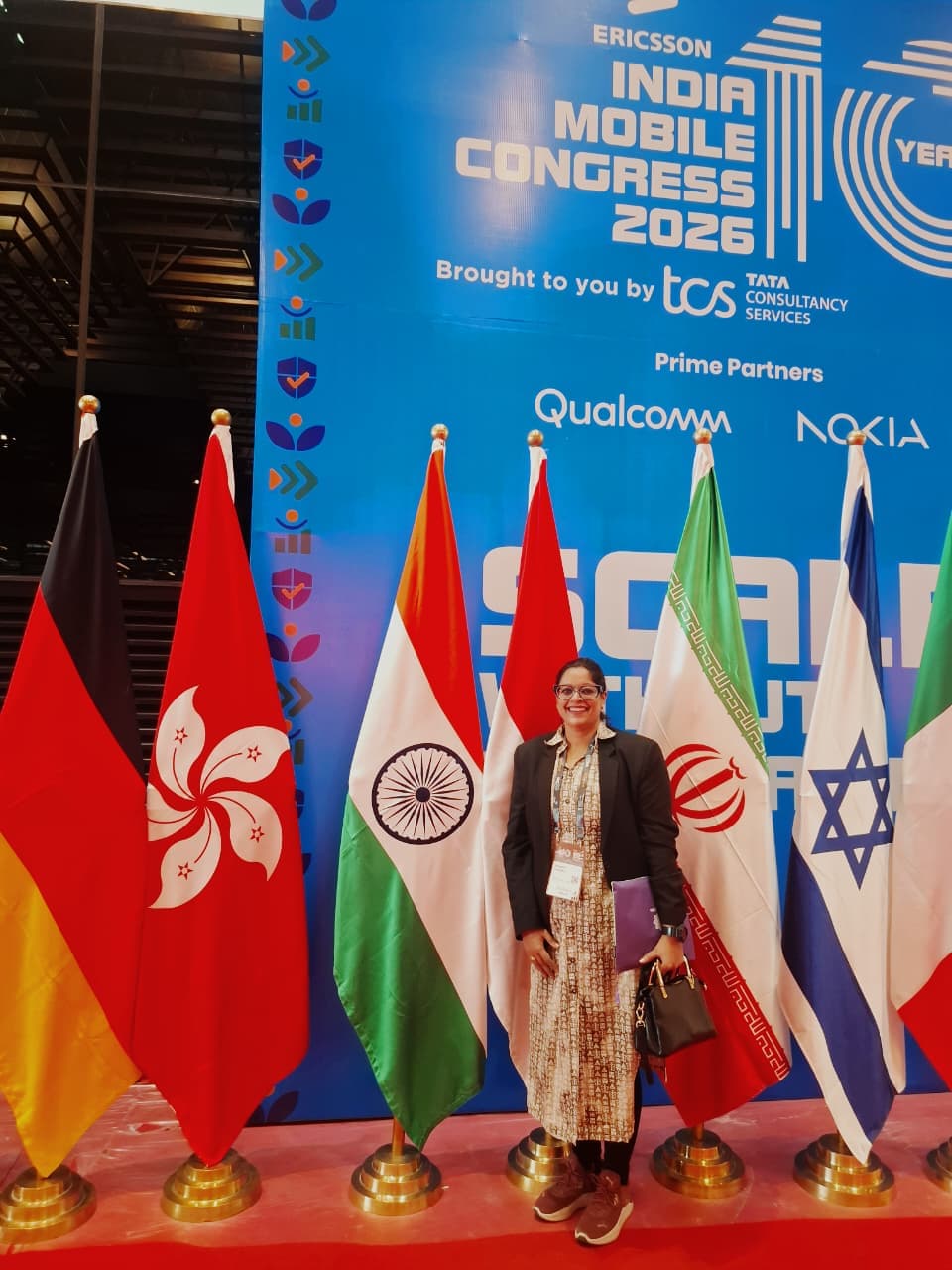
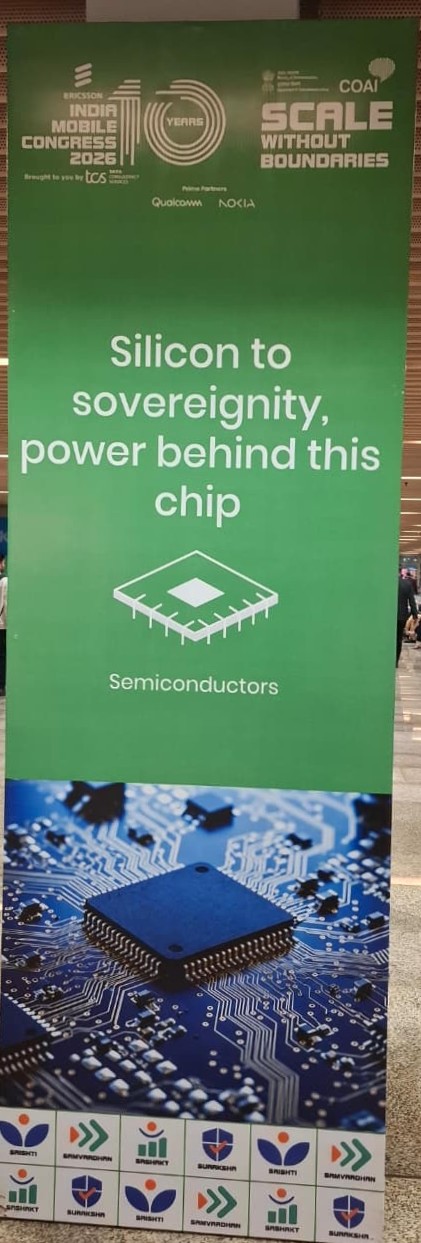
Our SICLD Awareness Initiative at the 10th edition of India Mobile Congress under the theme "Scale Without Boundaries", 7th to 10th October 2026 at Yashobhoomi in New Delhi.
The international technology conference assembled more than 500 emerging companies and 600 vendors to present cutting-edge innovations in DeepTech, 6G strategic plans, AI-integrated telecommunications infrastructure, and consumer devices including the forthcoming JioGlass.
The most notable product and technology introductions at IMC 2026 included:
• JioGlass Smart Glasses: Reliance Jio unveiled a prototype incorporating integrated video capture, instantaneous translation across 12 Indian languages, and QR-code transaction capabilities.
• HP Google Book 14: Introduced as among the inaugural laptops utilizing Google's proprietary "Google Book" operating system, equipped with a Qualcomm Snapdragon X Elite processor.
• Mahindra BE6 x Google AI: Displayed within the Qualcomm pavilion, demonstrating an embedded AI assistant called "Maya" seamlessly incorporated into the vehicle's cockpit interface.
• Viksit Tech 47: A state-supported initiative and ecosystem unveiled to systematically elevate Indian technology startups into internationally recognized consumer enterprises.
• Sensorise Wega M1: An innovative, domestically manufactured GSM and eSIM component unveiled to facilitate dependable national IoT and machine-to-machine communications infrastructure.
Legalese Law Firm took part in IMC 2026 with the objective of increasing awareness regarding SICLD registration within the semiconductor sector and among technology professionals. By engaging directly with industry stakeholders and offering assistance with registration procedures, the firm highlighted the significance of safeguarding semiconductor integrated circuit layout-design as India's technology landscape continues to expand.
At the conference, our team interacted with semiconductor manufacturers and industry stakeholders to highlight the significance of registering semiconductor integrated circuit layout-design under India's SICLD Act, 2000. These discussions aimed to increase understanding of the legal protections available for original semiconductor integrated circuit layout-design and demonstrate how such safeguards contribute to promoting innovation while protecting business interests.
Through our outreach efforts, we provided attendees with comprehensive instructions on completing the registration process. These interactions created a platform to respond to inquiries, deliver actionable insights, and motivate organizations to integrate intellectual property protection into their broader innovation and market commercialization strategies.
As India's semiconductor industry continues to advance, companies engaged in semiconductor design and allied technological fields must develop a comprehensive understanding of the relevant intellectual property regulations. Our involvement in IMC 2026 demonstrates our dedication to connecting legal knowledge with technological progress, enabling organizations to recognize and understand the importance of intellectual property protection strategies.
Legalese Law Firm continues to demonstrate its commitment to assisting corporations, forward-thinking organizations, and tech-focused companies by providing comprehensive legal counsel regarding intellectual property protection, registration methodologies, and associated regulatory obligations. We are enthusiastic about maintaining our partnership with the semiconductor sector and advancing understanding of the legal infrastructure that facilitates innovation throughout India.
Protection innovation begins with awareness. By participating in IMC 2026, we reinforced our dedication to advancing intellectual property awareness and fostering the expansion of India's semiconductor industry.
As technological platforms integrate and merge, safeguarding comprehensive legal protection for your physical chip architectures prevents illegal duplication, unauthorized reproduction, or competitive distribution.
Our organization is dedicated to assisting technology innovators in navigating the technicalities of filing for SICLD Registration and comprehensive intellectual property protection strategies.
If your company is advancing in proprietary semiconductor innovations or design configurations, you need to protect your intellectual assets. Explore our specialized services through our Semiconductor Layout-Design Registration Portal, or reach out to our intellectual property consulting team today.
FAQ
- What is a semiconductor?
A semiconductor is a material, like Silicon (Si), Germanium (Ge), or compounds such as Gallium Arsenide (GaAs) whose capability to conduct electricity is in between a conductor (a metal) and an insulator (glass). Its capability to conduct electricity can be controlled by adding impurities (like Phosphorus or Antimony) or by applying energy(heat/voltage/light).
- What are the eligibility criteria for registration of Layout-design of Semiconductor?
Originality: The Layout-design should be original and not an imitation of the existing Layout-Design, even if it is slightly modified, registration will be refused.
No prior commercial exploitation before filing : It must not be commercially exploited in India or abroad for more than 2 years prior to filing so that its novelty requirement doesn’t gets lost.
Tangible Representation: The Layout-design of the semiconductor chip must be captured in a concrete, physical or electronic form that can be examined, reproduced, or used for manufacturing.
- What are the steps involved in Registration of Semiconductor?

Registration process is easy, fast with minimum paper work. It has a time span of minimum 6 months to maximum 12 months (if there are no major objections) from the date of filling of application.
- Who can apply for registration?
Must be an Indian citizen, company, or organization, or can apply from abroad (subject to national filing rules).
- What details are required for registration of layout design?
Title of the layout-design – give a clear and specific name of the
layout-design. It should be precise, technical and descriptive and it shouldn’t reveal the confidential design details.
For Example : Low-Power CMOS Operational Amplifier IC Layout, 32-Bit RISC Microprocessor Core IC Layout, High-Speed Data Encryption IC Layout, Static Random Access Memory (SRAM) Cell Array IC Layout, Digital Signal Processing (DSP) IC Layout.
Semiconductor Integrated Circuit classification details :
Structure - giving structure details like Bipolar, MOS, Bi-MOS, Optical IC, Other (specify).
Technique - giving technique details like TTL, DTL, CMOS, NMOS, PMOS, Other (specify).
Function - giving functional details like Logic, Memory, Linear, Microcomputer, Other (specify).
Briefly describe the Layout-design – a short technical summary which explains what the layout-design is about further how it is arranged and its function in a semiconductor Integrated Circuit.
Brief of the Layout-Design (in brief) :
(i). Type of Integrated Circuit (analog/digital/mixed).
(ii). Arrangement of Circuit Elements (transistors, resistors, interconnections).
(iii). Purpose or Function of Integrated Circuit.
(iv). Special or novel features of the layout.
If the layout-design has been commercially exploited then provide details such as place/country where it was exploited and on which date.
Full name, description and nationality of the applicant. In the case of a body corporate or firm the country incorporation or the names and description of the partners composing the firm and the nature of registration, if any, as the case may be, should be stated.
Address of principal place of business in India, if any.
Layout-design drawings should be preferably on a paper of size 33-centimeter by 20-centimeter.
- What are the documents required for registration?
Drawings/Photographs- 3 sets
Clear Drawings/Photographs which should describe the Layout Design. They can be submitted in the GDS-II (Graphic Data System-II) file format along with the PDK (Process Design Kit) information used in the design.
Semiconductor integrated circuits- 4 pieces
[Where an Integrated Circuit (IC) has been made using layout-design applied for registration]
The IC chips with the same layout design which are applied for registration its four identical physical samples (pieces) must be submitted.
Details of fees deposited
Prescribed fee of ₹5,000/- paid via Demand Draft in favour of “PAO, CGPDTM” at Dwarka,New Delhi.
Power of Attorney in favour of the Advocate
- What is the validity period of registration?
The validity of the registration is 10 years from date of filing of application.
- Can an amendment be made to a Semiconductor Integrated Circuits Layout-Design (SICLD) application ?
Yes, an amendment can be made but it should not alter the fundamental nature or central idea of the design, Such kind of amendments or modifications are not automatic and allowed before registration but no amendment is allowed after registration except changes in the name and address of the applicant.
- Can any legal action be taken against the Infringer once the Semiconductor Integrated Circuits Layout-Design (SICLD) is registered?
Yes, a legal action can be taken.
When a registered layout-design is infringed by any person without the authorization of the registered proprietor, such act constitutes infringement under the Act.
The registered proprietor is entitled to institute civil proceedings against the infringer in a court of competent jurisdiction.
Legal actions available after registration:
Civil Remedies – The registered proprietor can file a suit (typically before a District Court) for:
Permanent or temporary orders to obstruct further infringement.
Damages for loss suffered.
Account of profits made by the infringer.
Delivery up/capture of infringing goods for destruction.
Criminal Liability
Wilful infringement(piracy) of a registered layout-design is a criminal offence further punishment and /or fine can be executed:
Imprisonment: Up to 3 years, or
Fine: ₹50,000, which can extend up to ₹10,00,000 or
Both imprisonment and fine.
- What is the punishment for falsely representing a Layout-design as registered?
Imprisonment: Up to 6 months, or
Fine: Up to ₹50,000, or
Both
- Can I license the IP rights to the company for manufacturing of semiconductor?
Yes, you can license the IP rights to a company for manufacturing semiconductors.
Licensing options
You may grant:
Exclusive license (only the licensee can use it)
Non-exclusive license (multiple licensees allowed)
Limited license (restricted by territory, duration, or purpose)
- Can registration of semiconductor be filed for foreign countries? and how?
Yes, protection for a semiconductor IC Layout-design can be obtained in foreign countries, but this cannot be done through a single international filing. Protection is territorial, so you must file separately in each country where protection is desired.
- Can the registration of Semiconductor layout design be cancelled?
Once the layout-design is registered, only cancellation is possible. Registration can be challenged/cancelled by government or third party, provided it is identical or imitated from any previously existing design.
- Can opposition be filed against the registration?
Once the Layout-design is accepted and advertised in the Official Journal any person can oppose registration by filing of the opposition petition within 3 months post the date of advertisement.
- What are grounds for filing Opposition to oppose registration?
Opposition is filed claiming lack of originality, prior commercial exploitation of the design, or failure to meet statutory requirements. The Registrar examines the opposition and may grant or refuse registration.
Any Appeals against the order shall be filed before the Layout-Design Appellate Board (LDAB).
- Can a Joint application be filed for Layout-design?
Yes, a layout-design can be jointly owned when created by two or more persons. All co-owners must be named in the registration application. They have equal rights to exploit the design, must consent to licensing or assignment, and can jointly enforce rights against infringement. Co-ownership disputes can be resolved through agreements or appealed to the Layout-Design Appellate Board (LDAB).
You can contact us for getting your semiconductor Layout-design registered with a seamless procedure so that your Layout-design becomes your own intellectual property officially and further it can be easily used commercially.
Our Law Firm is the Emerging Leaders for Semiconductor Registration.
Semiconductor Integrated Circuits Layout-Design Registry (SICLDR)
 +91-7827973775 | 9810203697
 +91-7827973775 | 9810203697 | 0124-4014769
E-mail :
legaleselawfirm@gmail.com,
contact@legaleselawfirm.com
+91-7827973775 | 9810203697 | 0124-4014769
E-mail :
legaleselawfirm@gmail.com,
contact@legaleselawfirm.com
